X.Y.Pu;L.Q.Hu;H.P.Wang;Y.X.Luo;X.H.Wang
Aim:To determine whether adenoviral gene transfer of insulin like growth factor- 1 (IGF- 1) to the penis of streptozotocin (STZ)-induced diabetic rats could improve erectile capacity. Methods: The STZ diabetic rats were transfected with AdCMV-βgal or AdCMV-IGF-1. These rats underwent cavernous nerve stimulation to assess erectile function and their responses were compared with those of age-matched control rats 1 to 2 days after transfection. In control and transfected STZ diabetic rats, IGF-1 expression were examined by reverse transcription polymerase chain reaction (RT-PCR), Western blot and histology. The penis β-galactosidase activity and localization of the STZ diabetic rats were also determined. Results: One to two days after transfection, the β-galactosidase was found in the smooth muscle cells of the diabetic rat penis transfected with AdCMV-βgal. One to 2 days after administration of AdCMVIGF-1, the cavernosal pressure, as determined by the ratio of maximal intracavernous pressure-to-mean arterial pressure (ICP/MAP) and total intracavernous pressure (ICP), was increased in response to cavernous nerve stimulation.Transgene expression was confirmed by RT-PCR, Western blot and histology. Conclusion: Gene transfer of IGF-1 significantly increased erectile function in the STZ diabetic rats. These results suggest that in vivo gene transfer of IGF-1 might be a new therapeutic intervention for the treatment of erectile dysfunction (ED) in the STZ diabetic rats.
作者:X.Y.Pu;L.Q.Hu;H.P.Wang;Y.X.Luo;X.H.Wang 刊期: 2007年第01期
Aim:To analyze the distribution of the single nucleotide polymorphism (SNP) C677T in the methylenetetrahydrofolate reductase (MTHFR) gene in 355 infertile Chinese patients with idiopathic azoospermia or severe oligozoospermia and 252 fertile Chinese men as controls to explore the possible association of the SNP and male infertility. Methods: Using the polymerase chain reaction (PCR)-restriction fragment length polymorphism technique, the allele and genotype distribution of SNP C677T in the MTHFR gene were investigated in both patients and controls. Results: The frequencies of allele T (40.9% vs 30.4%, P = 0.002, odds ration [OR] = 1.58, 95% confidence interval [CI]: 1.24-2.02) and mutant homozygote (TT) (18.3% vs. 11.5%, P = 0.023, OR = 1.72, 95% CI: 1.07-2.76) as well as carrier with allele (TT + CT) (63.4% vs. 49.2%, P = 0.0005, OR = 1.79, 95% CI: 1.29-2.48) in infertile patients were significantly higher than those in controls. After patient stratification, the significant differences in distribution of the SNP between each patient subgroup and control group still remained. Conclusion: Our findings indicate that there is an association of SNP C677T in the MTHFR gene with male infertility, suggesting that this polymorphism might be a genetic risk factor for male infertility in Chinese men.
作者:Z.C.A;Y.Yang;S.Z.Zhang;N.Li;W.Zhang 刊期: 2007年第01期
Aim:To test the hypothesis that season affects the semen quality of swamp buffalo (Bubalus bubalis) bulls used for artificial insemination (AI) under tropical conditions in Thailand, as it does in Bos taurus and Bos indicus. Methods: Clinical and andrological examinations, and monitoring of semen production and quality were carried out on five mature,healthy swamp buffalo AI bulls in Thailand from July 2004 to the end of June 2005. Sperm output, motility, morphology and plasma membrane integrity (PMI) were compared between three seasons of the year (rainy, I.e. July-October; winter, I.e. November-February; and summer, I.e. March-June) with distinct ambient temperature and humidity. Results: All bulls were diagnosed as clinically healthy and with good libido throughout the study. Ejaculate volume, pH, sperm concentration, total sperm number and initial sperm motility did not differ between seasons, whereas PMI and the relative proportion of morphologically normal spermatozoa were highest in summer and lowest in winter (P < 0.05). Buffalo age, week of collection and season influenced sperm morphology (P < 0.05-0.001). Among morphological abnormalities,only proportions of tail defects were affected by season, being highest in the rainy season and lowest in summer (P<0.001). In conclusion, climatic changes did not seem to largely affect semen sperm output or viability. Although the proportions of PMI and tail abnormalities were affected by season, they were always below what is considered unacceptable for AI bull sires. Conclusion: Seasonal changes did not appear to cause deleterious changes in sperm quality in swamp buffalo AI-sires in tropical Thailand.
作者:S.Koonjaenak;V.Chanatinart;S.Aiumlamai;T.Pinyopumimintr;H.Rodriguez-Martinez 刊期: 2007年第01期
Aim:To assess laminin levels in the seminal plasma of infertile and fertile men, and to analyze the correlation of laminin levels with sperm count, age, sperm motility and semen volume. Methods: One hundred and twenty-five recruited men were equally divided into five groups according to their sperm concentration and clinical examination: fertile normozoospermia, oligoasthenozoospermia, non-obstructive azoospermia (NOA), obstructive azoospermia (OA) and congenital bilateral absent vas deferens (CBAVD). The patients' medical history was investigated and patients underwent clinical examination, conventional semen analysis and estimation of seminal plasma laminin by radioimmunoassay. Results: Seminal plasma laminin levels of successive groups were: 2.82 ± 0.62, 2.49 ± 0.44,1.77 ± 0.56, 1.72 ± 0.76, 1.35 ± 0.63 U/mL, respectively. The fertile normozoospermic group showed the highest concentration compared to all infertile groups with significant differences compared to azoospermic groups (P<0.05). Testicular contribution was estimated to be approximately one-third of the seminal laminin. Seminal plasma laminin demonstrated significant correlation with sperm concentration (r = 0.460, P < 0.001) and nonsignificant correlation with age (r = 0.021, P = 0.940), sperm motility percentage (r = 0.142, P = 0.615) and semen volume (r = 0.035, P = 0.087). Conclusion: Seminal plasma laminin is derived mostly from prostatic and testicular portions and minimally from the seminal vesicle and vas deferens. Estimating seminal laminin alone is not conclusive in diagnosing different cases of male infertility.
作者:M.R.El-Dakhly;G.A.Tawadrous;T.Mostafa;M.M.F.Roaia;A.R.M.El-Nashar;S.A.Shedeed;I.I.Kamel;A.A.Aziz;Y.El-Mohtaseb 刊期: 2007年第01期
Aim:To characterize the matrix metalloproteinases (MMP)-2 promoter and to identify androgen response elements (AREs) involved in androgen-induced MMP-2 expression. Methods: MMP-2 mRNA levels was determined by reverse transcription-polymerase chain reaction (RT-PCR). MMP-2 promoter-driven luciferase assays were used to determine the fragments responsible for androgen-induced activity. Chromatin-immunoprecipitation assay and electrophoretic mobility shift assays (EMSA) were used to verify the identified AREs in the MMP-2 promoter. Results: Androgen significantly induced MMP-2 expression at the mRNA level, which was blocked by the androgen antagonist bicalutamide. Deletion of a region encompassing base pairs -1 591 to -1259 (relative to the start codon) of the MMP-2 promoter led to a significant loss of androgen-induced reporter activity. Additional deletion of the 5'-region up to -562 bp further reduced the androgen-induced MMP-2 promoter activity. Sequence analysis of these two regions revealed two putative ARE motifs. Introducing mutations in the putative ARE motifs by site-directed mutagenesis approach resulted in a dramatic loss of androgen-induced MMP-2 promoter activity, indicating that the putative ARE motifs are required for androgen-stimulated MMP-2 expression. Most importantly, the androgen receptor (AR) interacted with both motif-containing promoter regions in vivo in a chromatin immunoprecipitation assay after androgen treatment.Furthermore, the AR specifically bound to the wild-type but not mutated ARE motifs-containing probes in an in vitro EMSA assay. Conclusion: Two ARE motifs were identified to be responsible for androgen-induced MMP-2 expression in prostate cancer cells.
作者:B.Y.Li;X.B.Liao;A.Fujito;J.B.Thrasher;F.Y.Shen;P.Y.Xu 刊期: 2007年第01期
Aim:To determine if there are different penile hemodynamic patterns between sildenafil non-responders and responders by using color Doppler ultrasonography. Methods: A total of 69 erectile dysfunction (ED) patients aged 22-79 years were enrolled into the present study. Thirty-eight (55.1%) men with ED who did not respond to four attempts of treatment with 100 mg sildenafil after re-education were classified as sildenafil non-responders. A combination of three vasodilator drugs, 1.25 mg papaverine, 0.4 mg phentolamine and 5 μg prostaglandin El, was given by intracavernous injection before penile Doppler ultrasonography was carried out. The erectile response to intracavernous injection and vascular parameters including peak systolic velocity (PSV), resistance index (RI), end diastolic velocity (EDV) and cavernosa artery diameter (CD) were measured and the results between sildenafil nonresponders and responders were compared. Results: No statistical difference in vascular parameters measured by Doppler ultrasonography studies between non-responders and responders was noted. Sildenafil non-responders had a poorer penile rigidity response to intracavernous injection than responders (P < 0.05). Among patients with adequate PSV (≥ 30 cm/s) and abnormal EDV (> 5 cm/s), individuals in the non-responder group had fewer positive responses to intracavernous vasodilator injection than in the responder group (35.3% vs. 72.2%, P < 0.05). Advanced age and comorbidity with diabetes mellitus were significantly associated with sildenafil non-response (P < 0.05).Conclusion: Sildenafil non-responders were characterized by a poorer penile rigidity response to intracavernous injection and had an associated impaired veno-occlusive mechanism. Advanced age and comorbidity with diabetes mellitus were two common factors associated with non-response.
作者:S.T.Huang;M.L.Hsieh 刊期: 2007年第01期
Aim:To investigate the possible functions of human sperm membrane protein (hSMP-1) in the process of fertilization.Methods: A 576-bp cDNA fragment of HSD-1 gene coding for the extracellular domain of hSMP-1 was cloned and expressed. The localization of this protein on human and mouse sperm was determined by indirect immunofluorescent staining by using anti-recombinant hSMP-1 (anti-rhSMP-1) antibodies. Sperm acrosome reaction and spermzona pellucida (ZP) binding assay were carried out in 10-week-old BALB/c mice. Results: Recombinant hSMP-1 was successfully cloned and expressed. The expression of the native protein was limited on the acrosome of human and mouse sperm. Treatment of anti-rhSMP-1 antibodies significantly decreased the average number of sperms bound to each egg. Meanwhile, the percentage of acrosome reaction was decreased in comparison to pre-immune control after treatment with anti-rhSMP-1 (P < 0.05). Conclusion: The results suggest that anti-rhSMP-1 antibody inhibited mouse acrosome reaction and sperm-ZP binding.
作者:G.Y.Cheng;J.L.Shi;M.Wang;Y.Q.Hu;C.M.Liu;Y.F.Wang;C.Xu 刊期: 2007年第01期
Aim:To evaluate the protective/ameliorative effects of vitamin E (vit E) on ethane dimethane sulfonate (EDS)-induced testicular toxicity in rats. Methods: The rats were assigned to eight groups, seven rats in each, and were injected intraperitoneally with vehicle, a single dose of ethane dimethane sulfonate (EDS) (75 mg/kg bodyweight), vit E (100 mg/kg bodyweight) or EDS + vit E for 3-7 days. Thereafter, the rats were weighed, anaesthetized with ether and killed by cervical dislocation. The left testis weights were recorded and the relative testis weights were calculated.The left testes were processed for routine paraffin embedding. Three right testes from each group were taken randomly and then processed for routine electron microscopy. Tissue sections were examined using light and electron microscopy, and were scored for histopathological changes. Results: Vit E coadministration did not prevent the bodyweight loss on days 3 and 7. However, vit E administration prevented the EDS-induced testicular-weight loss in rats that received vit E for 3 days but not 7 days. The relative testis weight was higher on day 3 (instead of on day 7) than other groups. Nevertheless, the testis histology was not markedly protected by vit E in the EDS-treated rats.Detailed microscopic assessment showed few Leydig cells and abundant fibroblast-like cells indicating only some protection. Conclusion: Vit E cotreatment showed partial protective effects on the testicular weight and testicular histology in rats that received EDS.
作者:V.Sahinturk;C.Guclu;C.Baycu 刊期: 2007年第01期
Aim:To explore the interaction between bladder compliance (BC) and bladder outflow obstruction (BOO) in men with benign prostatic hyperplasia (BPH) using cross-sectional and longitudinal studies. Methods: A total of 181 men with BPH were recruited, and 100 of them were followed for one year. Cystometry was performed in a standing or a sitting position with 30 mL/min infusion. BC was manually corrected and defined. Obstruction coefficient (OCO),linear passive urethral resistance relation and international continence society (ICS) nomogram were used to diagnose BOO. The obstructed parameters were compared between the reduced BC group and the non-reduced group. BC was compared between the first investigation at the beginning of study and the second investigation at the end of study during the one-year follow-up period. Results: The group with reduced BC had increased OCO and linear passive urethral resistance relation. BC was significantly lower in the obstructed group (55.7 mL/cm water) than that in unobstructed and equivocal one (74.9 mL/cm water, P < 0.01). BC gradually reduced with the increased obstructed grade. There was a significantly weak negative correlation between BC and OCO (r = - 0.132, P<0.01).Over the one-year follow-up period in the longitudinal study, BC for all men changed from 54.4 to 48.8 mL/cm water (P > 0.05), and BC for the group with BOO fell from 58.4 ± 70.1 to 46.5 ± 38.7 mL/cm water (P > 0.05). Conclusion:In men with BPH, a significant systematic decrease occurred in BC in the obstructed group and a significant systematic increase with urethral resistance occurred in the low BC group. A longitudinal study of the tendency of BC reduction in a group with BOO is necessary in the future.
作者:L.M.Liao;W.Schaefer 刊期: 2007年第01期
Aim:To investigate if interleukin-6 (IL-6), interleukin-8 (IL-8), interleukin-10 (IL-10), interferon-gamma (IFN-γ) or tumor necrosis factor-alpha (TNF-α) are able to stimulate the level of lipid peroxidation of sperm membranes, either alone or in the presence of leukocytes. Methods: Semen samples from normozoospermic donors were prepared by density gradient. The sperms were exposed to the indicated cytokines, at physiological and infection-inflammation concentrations, in the absence or presence of leukocytes. Lipid peroxidation of the sperm membranes was determined by measuring malondialdehyde (MDA) and 4-hydroxialkenals (HAE) formation. Results: TNF-α, IL-8 and IFN-γ increased the level of sperm membrane lipid peroxidation when tested at physiological concentrations. At infectioninflammation concentrations, only IL-8 was able to produce a higher effect. When assayed in the presence of leucocytes,IL-8 and TNF-α showed a higher effect at infection-inflammation concentrations than at physiological concentrations.Finally, IL-8 showed a higher effect in the presence of leukocytes than in their absence at both physiological and infection-inflammation concentrations. TNF-α also showed a higher effect when assayed in the presence of leukocytes than in their absence, but only at infection-inflammation concentrations. There was no effect of IL-6 or IL- 10 in any of the tested conditions. Conclusion: Several pro-inflammatory cytokines at physiological concentrations increase the level of lipid peroxidation of sperm membranes, which could be important for the sperm fecundation process. However, infection-inflammation concentrations of some cytokines, such as IL-8 and TNF-α, either alone or in the presence of leukocytes, could drive the lipid peroxidation of the spermatozoa plasma membrane to levels that can affect the sperm fertility capacity.
作者:P.Martinez;F.Proverbio;M.I.Camejo 刊期: 2007年第01期
Aim:To test the hypothesis that sildenafil (50 mg nightly for one year) can improve spontaneous erectile function (EF) in men with mild-to-moderate arteriogenic erectile dysfunction (ED) responsive to erectogenic treatment. Methods:In a prospective open-label trial, 112 men with ED were randomized to sildenafil 50 mg nightly or sildenafil 50 or 100 mg as needed for 12 months, followed by one-month and 6-month non-medicated periods. Non-randomized,non-medicated men with ED were also assessed. The EF domain of the International Index of Erectile Function (IIEF EF) and the peak systolic velocity (PSV) of penile cavernous arteries were used to measure the efficacy. Results:After sildenafil treatment and a subsequent non-medicated month, IIEF EF was normal in 29 of 48 (60.4%, 95%confidence interval [CI]: 45.3-74.2%) of the nightly group vs. 4 of 49 (8.2%, 95% CI: 2.3-19.6%) of the as-needed group. PSV improved by 11.2 cm/s (95% CI: 4.7-21.4; P = 0.012) in the nightly group but only by 3.4 cm/s (-5.1-14.7; P = 0.435) in the as-needed group. IIEF EF normalized in 1 of 18 (5.6%, 95% CI: 0.1-27.3%) non-medicated men and the PSV declined slightly. Six months after treatment, the IIEF EF remained normal and PSV was stabilized in most (28/29, 97%) nightly group men who had initially normalized. Conclusion: Sildenafil nightly for one year resulted in ED regression that persisted well beyond the end of treatment, so that spontaneous EF was characterized as normal on the IIEF in most men. The results from this open-label, randomized trial warrant verification under double-blind, placebo-controlled conditions.
作者:F.Sommer;T.Klotz;U.Engelmann 刊期: 2007年第01期
The diagnosis and treatment of erectile dysfunction has changed dramatically since the availability of safe and effective oral therapies. Unfortunately, not all men can be adequately treated in this way, and might require more invasive testing to diagnose and treat the specific cause of their dysfunction. This review looks at the tests and strategies available for men who cannot be treated by oral therapy alone.
作者:K.Jacobsohn;R.WanR 刊期: 2007年第01期
Hypospadias is the most common congenital anomaly of the penis. The problem usually develops sporadically and without an obvious underlying cause. The ectopically positioned urethral meatus lies proximal to the normal site and on the ventral aspect of the penis, and in severe cases opens onto the scrotum or perineum. The foreskin on the ventral surface is deficient, while that on the dorsal surface is abundant, giving the appearance of a dorsal hood.Chordee is more common in severe cases. Cryptorchidism and inguinal hernia are the most common associated anomalies. The frequency of associated anomalies increases with the severity of hypospadias. For isolated anterior or middle hypospadias, laboratory studies are not usually necessary. Screening for urinary tract anomalies should be considered in patients with posterior hypospadias and in those with an anomaly of at least one additional organ system.The ideal age for surgical repair in a healthy child is between 6 and 12 months of age. Most cases can be repaired in a single operation and on an outpatient basis. Even patients with a less than perfect surgical result are usually able to enjoy a satisfactory sexual life.
作者:A.K.C.Leung;W.L.M.Robson 刊期: 2007年第01期
Aim:To examine whether a relationship exists between glutathione S-transferase Mu-1 (GSTM1) gene polymorphism and the susceptibility of sperm and seminal plasma from patients with idiopathic infertility to oxidative stress.Methods: Fifty-two men with idiopathic infertility and 60 healthy fertile men were recruited to this study. GSTM1 gene polymorphism was determined by polymerase chain reaction (PCR) and both the infertile and control individuals were divided into GSTM1 null and GSTM1 positive groups according to their GSTM1 gene structure. We compared reactive oxygen species (ROS) generation, malondialdehyde (MDA), protein carbonyls and glutathione (GSH) concentrations, and glutathione S-transferase (GST) activity in seminal plasma and spermatozoa from infertile patients and controls with respect to GSTM1 genotype. Results: Significantly higher levels of oxidative stress and damage markers were found in idiopathic infertile men with the GSTM1 null genotype compared with those with the GSTM1 positive genotype. There was no significant difference in genotype distribution for the GSTM1 variant between the idiopathic infertile subjects and fertile subjects. Patients with the GSTM1 null genotype also had lower sperm concentrations than those with GSTM1 positive genotype. Conclusion: Our results suggest that the susceptibility of sperm and seminal plasma to oxidative stress is significantly greater in idiopathic infertile men with the GSTM1 null genotype compared with those possessing the gene. Therefore, in patients with idiopathic infertility,GSTM1 polymorphism might be an important source of variation in susceptibility of spermatozoa to oxidative damage.
作者:B.Aydemir;I.Onaran;A.R.Kiziler;B.Alici;M.C.Akyolcu 刊期: 2007年第01期
Aim:To study the influence of enterococci on human sperm membrane in vitro. Methods: Ejaculated human sperm were artificially infected with β-hemolytic or non-β-hemolytic enterococci at the bacteria: sperm ratio of 50:1 at 37℃.Sperm membrane integrity was examined after incubation for 1, 3 and 5 h by hypoosmotic swelling (HOS) test and electron microscopy. Results: Sperm infected with β-hemolytic enterococci had lower HOS scores compared with non-β-hemolytic strains or uninfected control (P < 0.01). The HOS test scores of sperm infected with β-hemolytic enterococci increased in the presence of phosphatidylcholine, an inhibitor of hemolysin. Non-β-hemolytic strains showed no significant difference in swelling rate, compared with the control group (P > 0.05). It was shown by electron microscopy that β-hemolytic enterococci caused significant rupture of human sperm membrane. Conclusion: β-hemolytic enterococci caused human sperm membrane injury, and might be mediated by the hemolysin of enterococci.
作者:H.Qiang;M.S.Jiang;J.Y.Lin;W.M.He 刊期: 2007年第01期
Aim:To investigate the possible causes of oligozoospermia and azoospermia in infertile Thai men, and to find the frequencies of Y chromosome microdeletions and cytogenetic abnormalities in this group. Methods: From June 2003 to November 2005, 50 azoospermic and 80 oligozoospermic men were enrolled in the study. A detailed history was taken for each man, followed by general and genital examinations. Y chromosome microdeletions were detected by multiplex polymerase chain reaction (PCR) using 11 gene-specific primers that covered all three regions of the azoospermic factor (AZFa, AZFb and AZFc). Fifty men with normal semen analysis were also studied. Karyotyping was done with the standard G- and Q-banding. Serum concentrations of follicle stimulating hormone (FSH), luteinizing hormone (LH), prolactin (PRL) and testosterone were measured by electrochemiluminescence immunoassays (ECLIA). Results: Azoospermia and oligozoospermia could be explained by previous orchitis in 22.3%, former bilateral cryptorchidism in 19.2%, abnormal karyotypes in 4.6% and Y chromosome microdeletions in 3.8% of the subjects. The most frequent deletions were in the AZFc region (50%), followed by AZFb (33%) and AZFbc (17%).No significant difference was detected in hormonal profiles of infertile men, with or without microdeletions.Conclusion: The frequencies of Y chromosome microdeletions and cytogenetic abnormalities in oligozoospermic and azoospermic Thai men are comparable with similarly infertile men from other Asian and Western countries.
作者:T.Vutyavanich;W.Piromlertamorn;W.Sirirungsi;S.Sirisukkasem 刊期: 2007年第01期
Aim:To investigate the activity of RRR-α-tocopheryloxybutyric acid (TOB), an ether analog of RRR-α-tocopheryl succinate (VES), in prostate cancer cells. Methods: VES and TOB were used to treat prostate cancer LNCaP, PC3,and 22Rv1 cells and primary-cultured prostate fibroblasts. The proliferation rates were determined by MTT assay,the cell viabilities were determined by trypan blue exclusion assay, and the cell deaths were evaluated by using Cell Death Detection ELISA kit. The protein expression levels were determined by Western blot analysis. Results: The MTT growth assay demonstrated that TOB could effectively suppress the proliferation of prostate cancer cells, but not normal prostate fibroblasts. Mechanism dissections revealed that TOB reduced cell viability and induced apoptosis in prostate cancer cells similar to VES. In addition, both TOB and VES suppressed prostate-specific antigen (PSA) at the transcriptional level leading to reduced PSA protein expression. Furthermore, vitamin D receptor (VDR) expression increased after the addition of TOB. Conclusion: Our data suggests that the VES derivative, TOB, is effective in inhibiting prostate cancer cell proliferation, suggesting that TOB could be used for both chemopreventive and chemotherapeutic purposes in the future.
作者:E.Chang;J.Ni;Y.Yin;C.C.Lin;P.Chang;N.S.James;S.R.Chemler;S.Yeh 刊期: 2007年第01期
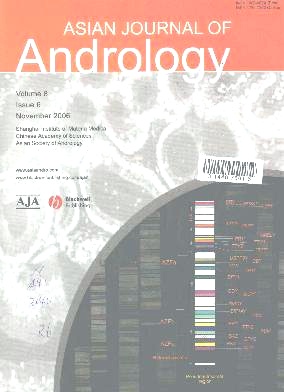
亚洲男性学(英文版)杂志
主管:中国科学院
主办:中国科学院上海药物研究所